Primary passages: Luke 21:20–24; Mark 13; Daniel 9.
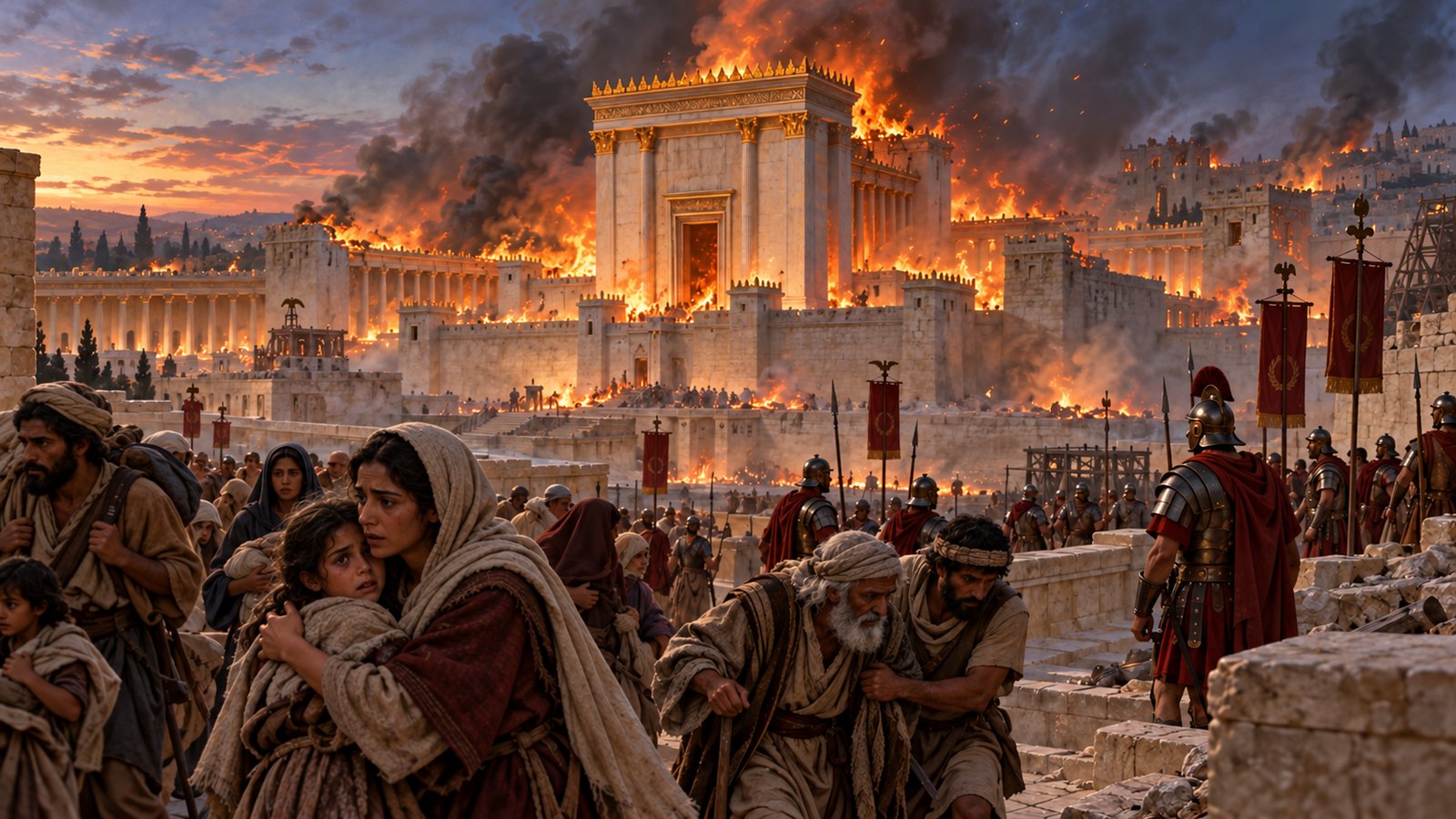
Rome burned the Temple in August AD 70, as Jesus had warned. The earthly sanctuary fell, but access to God rests in the risen Messiah (Luke 21; Mark 13; Hebrews 9–10).
In this chapter
The previous chapter established that the Church is God’s temple through the Spirit. That reality begins before AD 70, through Jesus’ saving work and the gift of the Spirit. Rome’s destruction does not create the gospel or make Jesus’ sacrifice effective. The catastrophe reveals the vulnerability of the earthly sanctuary while the Church’s access to the Father already rests in the risen Son.
AD 66–73
- AD 66 The Jewish revolt against Rome begins.
- April AD 70 Titus besieges Jerusalem at Passover.
- Late August AD 70 The Temple is burned (Josephus, War 6).
- AD 73–74 Masada falls.
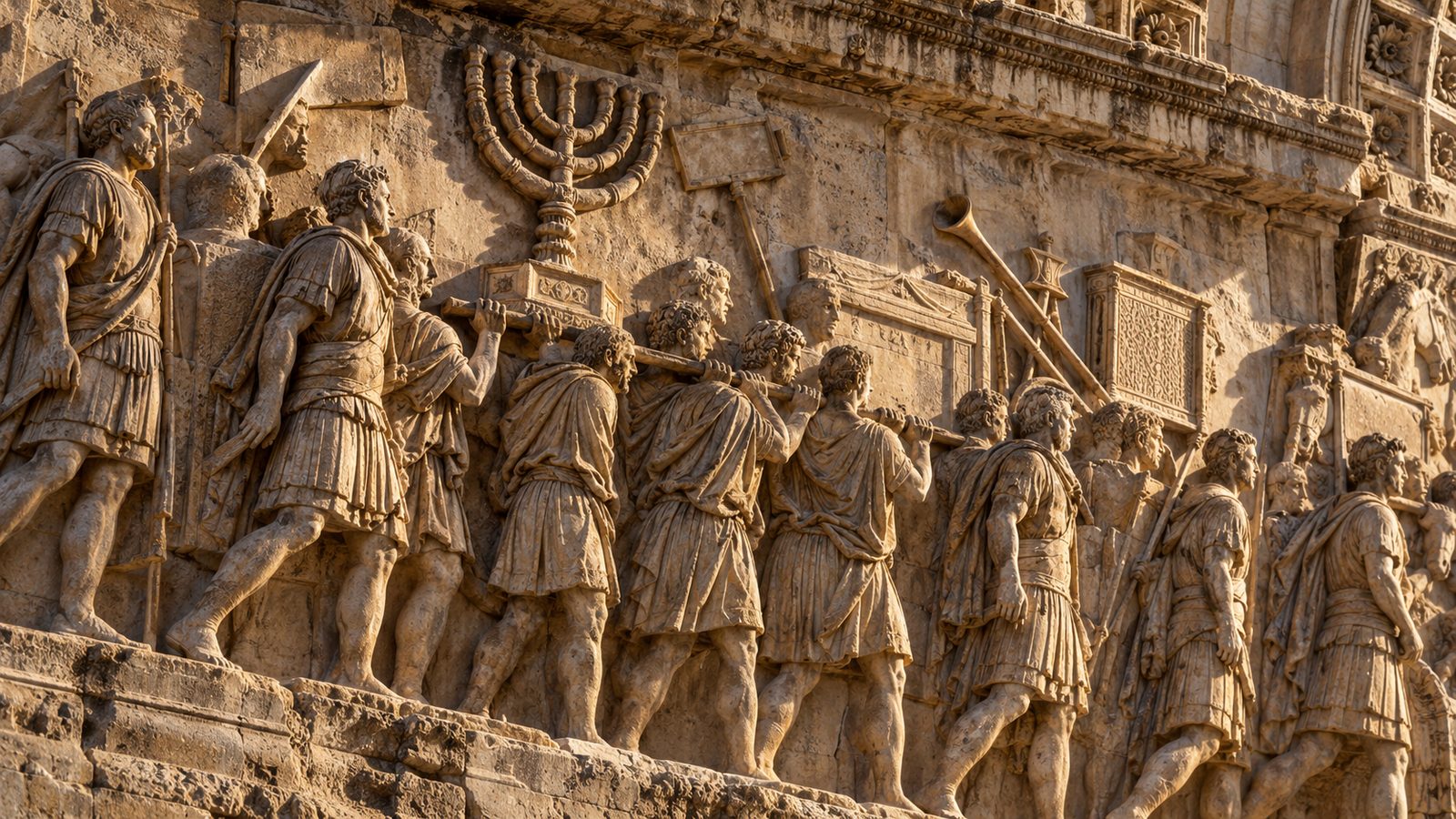
- Archaeology The Arch of Titus in Rome shows the menorah carried in triumph, and fallen Herodian stones lie where the Romans threw them below the Temple Mount.
Temple implication: Jesus' prophecy of the Temple's fall is fulfilled, and the sacrificial system ends, while the risen Messiah remains.
The stones that seemed permanent
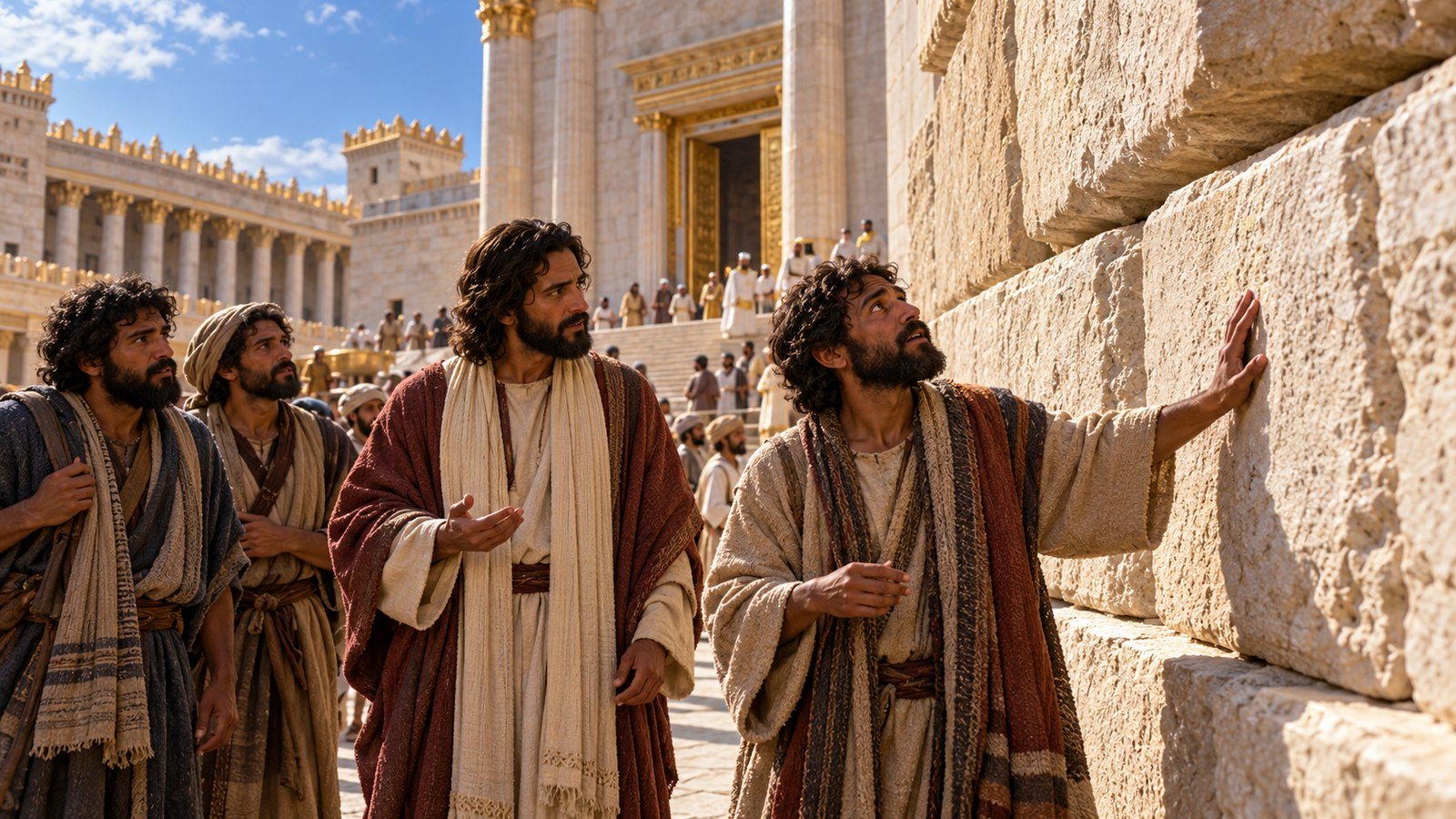
A disciple admires the Temple’s stones and buildings. Jesus answers with a warning that the great structures will be thrown down (Mark 13:1–2). The contrast is stark: the disciple sees permanence, while Jesus announces the coming collapse.
In AD 70, Roman forces under Titus capture Jerusalem and destroy its Temple during the suppression of the Jewish revolt. The sanctuary’s sacrificial worship ends. The loss is architectural, communal, and religious: the place that had organized public worship for generations is devastated.
This chapter should be read with grief. Jerusalem’s people are not scenery in a lesson about a building. Ancient accounts describe famine, violence, captivity, and death. A Christian reading of Jesus’ warning must retain His tears over the city.
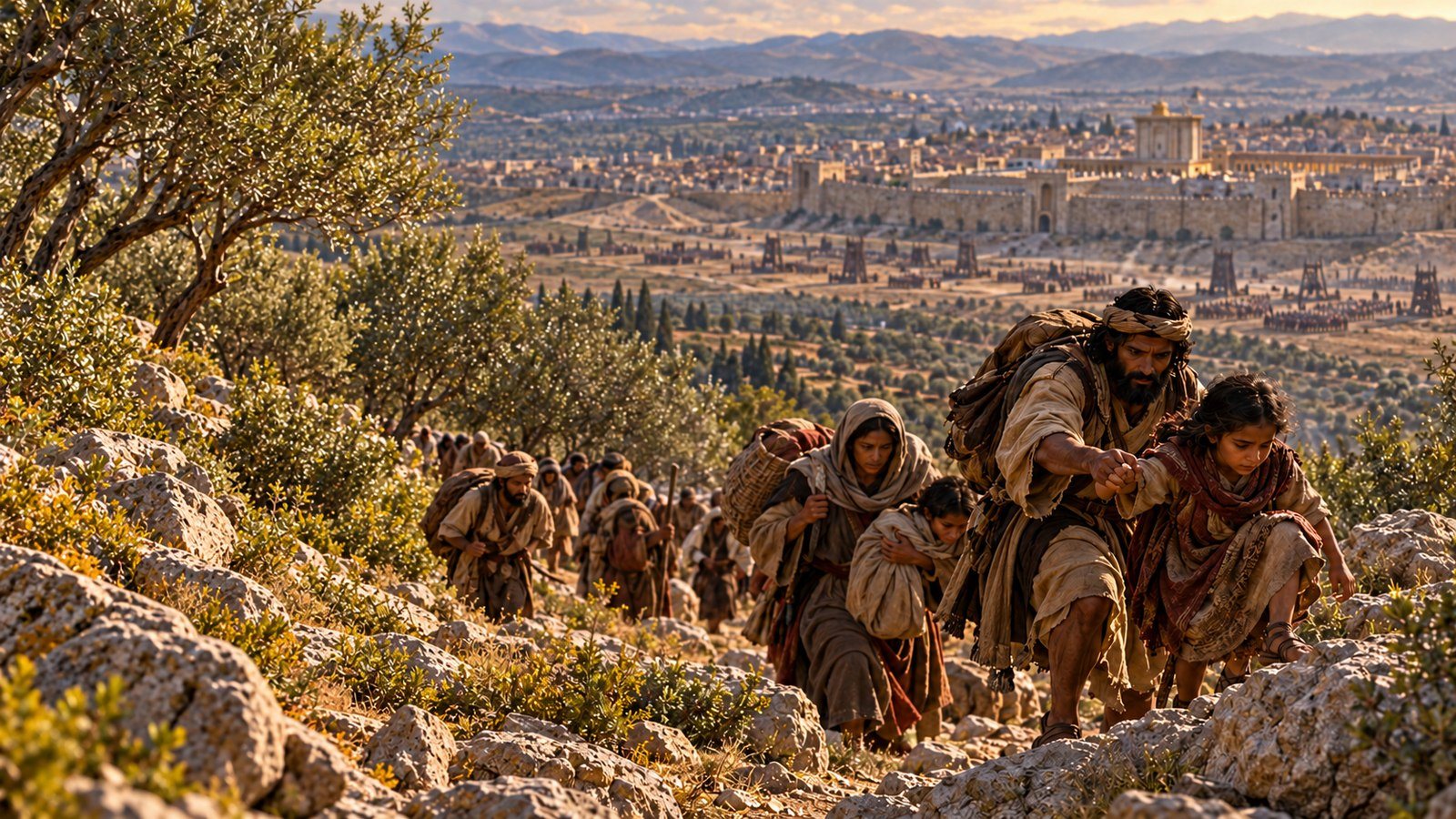
20“But when you see Jerusalem surrounded by armies, then know that its desolation is at hand.
21Then let those who are in Judea flee to the mountains. Let those who are in the middle of her depart. Let those who are in the country not enter therein.
Jesus’ warning belongs to His prophetic ministry
Luke 19:41–44 records Jesus weeping over Jerusalem and describing its coming siege. Luke 21:20–24 speaks of armies surrounding the city, desolation, flight, death, and captivity. Mark 13 and Matthew 24 place the Temple’s destruction within broader teaching about deception, distress, faithfulness, and the coming of the Son of Man.
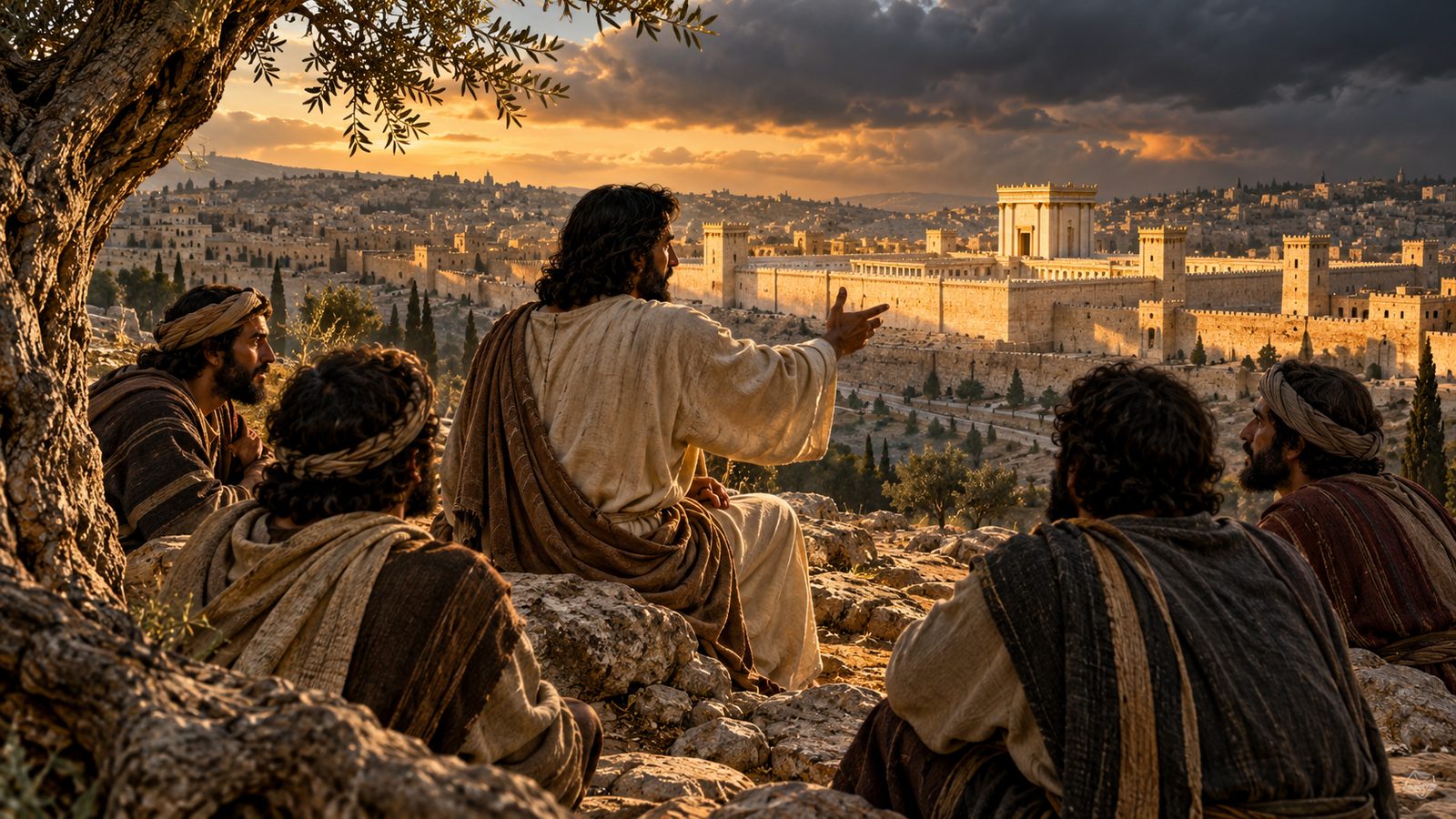
The fall of Jerusalem brings the warnings about the city and sanctuary into concrete historical focus. Christians interpret the extended discourse differently, some seeing every part fulfilled in AD 70 and others placing part of it at the final return of Jesus. Derek (this website's editor) respects varied interpretations of similar passages but holds that the siege and the Temple’s fall in Luke 21 did occur in AD 70, while the abomination of desolation and the return of Jesus in Matthew 24 are still ahead. We should not use the certainty of the Temple’s fall to pretend all chronological questions are settled.
Jesus speaks with authority within the prophetic tradition. His warning continues the biblical insistence that possession of a sanctuary cannot exempt a people from accountability to God. Jeremiah had confronted that false security centuries earlier (Jeremiah 7:1–15).
The revolt and the Roman siege
The revolt against Roman rule begins in AD 66. Its suppression eventually brings Titus’s forces against Jerusalem in AD 70. The city’s defenders also face destructive internal division. The siege culminates in the burning of the sanctuary and the capture of the city.
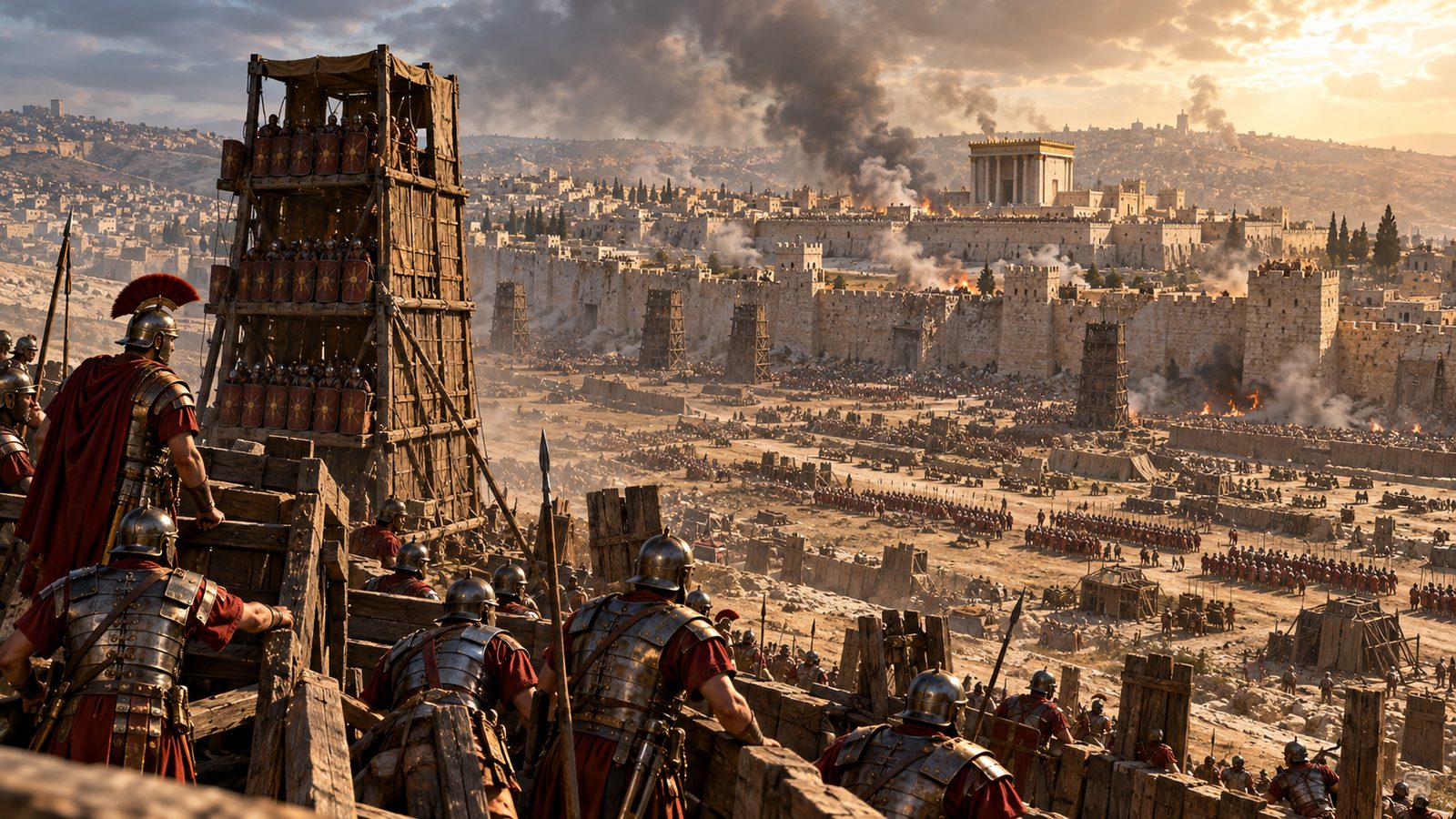
Josephus, a Jewish participant in the war who later wrote under Roman patronage, is a major source. His Jewish War describes the Temple fire and attributes it to a soldier acting against Titus’s wish to preserve the sanctuary. That presentation must be identified as Josephus’s account, not treated as an uncontested acquittal of Roman command. His interests and claims require historical evaluation.
We do not need a sensational casualty figure, an invented final conversation, or an embellished account of molten gold to communicate the disaster’s seriousness. The destruction of the sanctuary and the suffering of the population are sufficient.
What was lost—and what survives
The Temple building and its functioning sacrificial ministry are destroyed. That does not mean every retaining wall or foundation of the enormous platform disappears. Surviving structures associated with the complex must not be confused with an intact sanctuary.
Likewise, AD 70 is not the beginning of all Jewish dispersion, nor the moment every Jewish person leaves the land. Diaspora communities already existed, and Jewish life continues afterward in the land and elsewhere. The catastrophe transforms that life; it does not erase the people or their attachment to Jerusalem.
Daniel’s sanctuary prophecy and the need for careful connections
Daniel 9:26 speaks of the destruction of the city and sanctuary after the cutting off of an anointed one. Many Christians relate this sequence to Jesus’ death and the Roman destruction. That connection contributes to their reading of Jesus as the promised Messiah whose rejection does not defeat God’s saving purpose.
Chapter 38 examines the futurist expectation of a further sanctuary and desecration. We can recognize a significant connection between Daniel, Jesus’ warnings, and AD 70 without assigning every element of the prophecy to one event.
The saving fulfillment precedes the catastrophe
Jesus’ resurrection vindicates His claim about the temple of His body (John 2:19–22). Hebrews identifies His offering as once for all and His heavenly ministry as the basis of enduring access to God (Hebrews 9:24–28; 10:10–22). Those truths do not depend on a Roman victory.
The old sanctuary established sacrifice and mediation; the Son’s obedient death and resurrection accomplish the reconciliation those services could not complete. His identity as Messiah and Son of God rests on the scriptural and apostolic testimony to His life and work, not simply on the fact that a building later burns.
The Temple Falls; Israel Remains in the Story
As Jesus leaves the Temple for the last time, a disciple marvels at its stones. Jesus answers that not one will be left on another (Mark 13:1–2). He then tells them what to watch for: when Jerusalem is surrounded by armies, those in Judea must flee to the mountains (Luke 21:20–21). Eusebius, the early church historian, reports that the believers in Jerusalem left for Pella before the siege closed in. In AD 70 Titus's legions take the city and burn the Temple, just as Jesus said, and many Jews are killed or scattered.
But Jesus adds a line that keeps Jerusalem in the story: it will be trampled by the Gentiles "until the times of the Gentiles are fulfilled" (Luke 21:24). Paul, writing before these events, asks whether God has rejected His people. "May it never be," he answers (Romans 11:1–2), and the gifts and calling of God are irrevocable (Romans 11:29). The Temple falls, but Israel is not set aside.
Access that armies cannot abolish
The appointed earthly sanctuary is gone, but the risen Jesus ministers in the true sanctuary. Believers draw near through Him and are built together as God’s dwelling by the Spirit (Hebrews 8:1–2; Ephesians 2:18–22). The Father’s presence is not secured by an army, and His government is not defeated by the destruction of a city. This does not make places, history, or grief unimportant. It establishes where final confidence belongs. We can lament loss, pray for Jerusalem, and remain faithful because access to God rests in the living Messiah.
Temple Prayer Response
Father, teach us to grieve suffering without surrendering hope. Jesus, thank You that Your resurrection and priesthood secure access no earthly power can destroy. Keep us from arrogance toward Israel, careless prophecy claims, and false confidence in religious structures. Holy Spirit, make us compassionate witnesses who trust Your Word and serve faithfully in troubled times. Amen.
Mark 13:1–23; Luke 19:41–44; 21:20–24; Matthew 24; Jeremiah 7:1–15; Daniel 9:24–27; John 2:19–22; Hebrews 8:1–2; 9:24–28; 10:10–25; Romans 9:1–5; 10:1; 11:17–29.
- How do Jesus’ tears shape the way we speak about Jerusalem’s destruction? Why is the Church’s temple identity not a consequence created by AD 70? What does it mean to base confidence on Christ’s priesthood rather than religious structures?
The destruction in AD 70 is distinguished from the revolt beginning in AD 66 and the later Bar Kokhba revolt. Josephus is an ancient source whose account of Titus’s intentions is attributed rather than asserted as uncontested fact. Exact casualty totals and reconstructed private dialogue are omitted. The labeled Scripture block quotes the World English Bible (WEB), public domain; other Scripture discussion is summarized. L: Mark 13 — The warning concerning the Temple | https://ebible.org/eng-web/MRK13.htm L: Luke 19 — Jesus weeps over Jerusalem | https://ebible.org/eng-web/LUK19.htm L: Luke 21 — Siege and desolation | https://ebible.org/eng-web/LUK21.htm L: Daniel 9 — The city and sanctuary | https://ebible.org/eng-web/DAN09.htm L: Josephus, Jewish War 6.4 — The Temple fire (Whiston translation) | https://www.ccel.org/ccel/josephus/complete.iii.vii.iv.html L: Hebrews 10 — The sufficient sacrifice | https://ebible.org/eng-web/HEB10.htm
Common Questions About Roman Destruction of the Temple, AD 70
When was the Temple destroyed by Rome?
In late August AD 70, after Titus besieged Jerusalem from Passover that year (Josephus, War 6).
Did Jesus predict the Temple's destruction?
Yes. He said not one stone would be left on another (Mark 13:1–2) and warned of Jerusalem surrounded by armies (Luke 21:20–24).
What does the Arch of Titus show?
Its relief in Rome shows Roman soldiers carrying the Temple menorah in triumph.