Primary passages: Hebrews 13:14–15; John 2; Romans 11; historical sources.
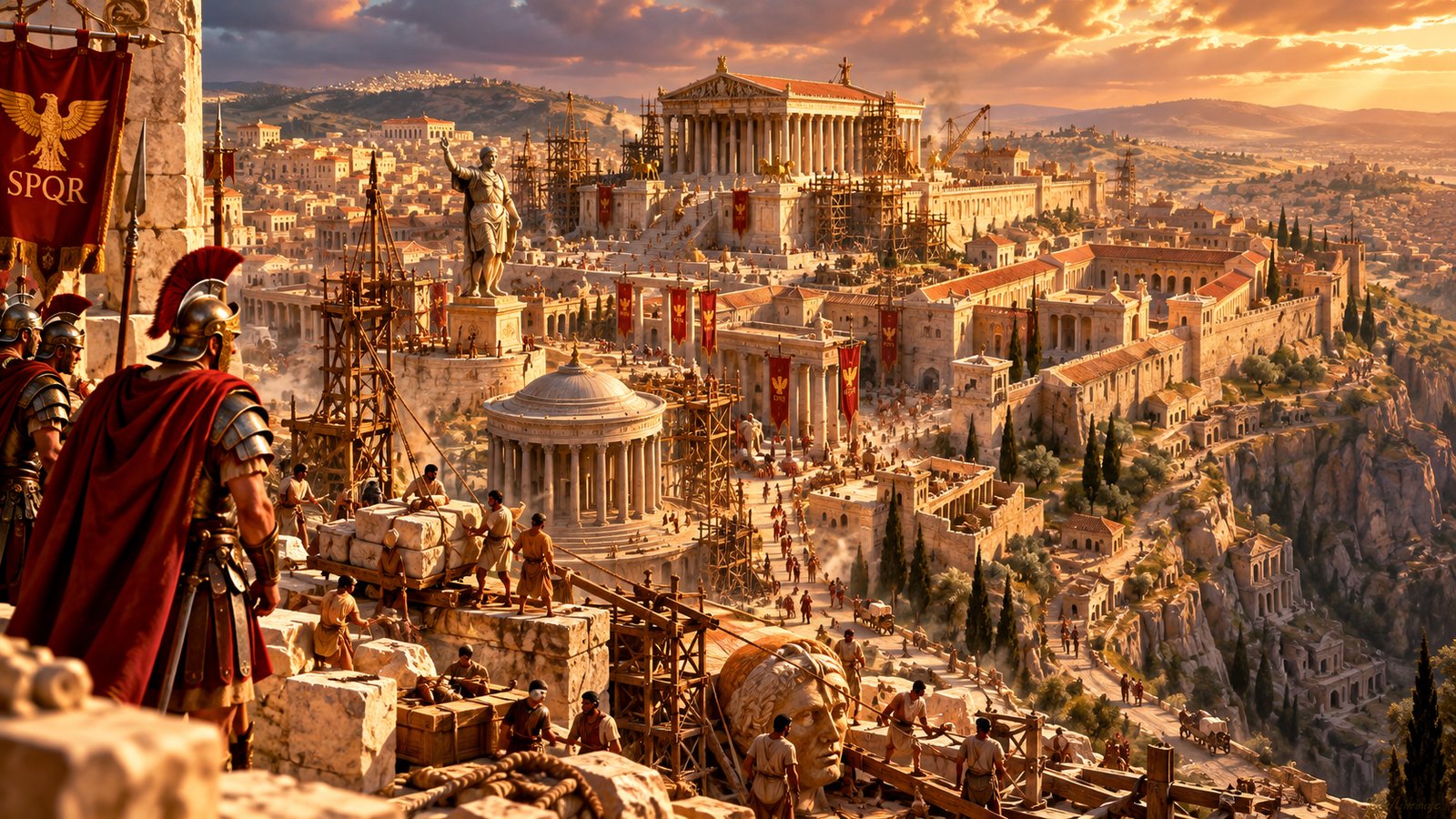
Hadrian rebuilt Jerusalem as the Roman city Aelia Capitolina, and the Bar Kokhba revolt (AD 132–135) was crushed. God's promises were not canceled by Rome's power.
In this chapter
Chapter 35 faced the Roman destruction of AD 70. We now move to the early second century and the period around the Bar Kokhba revolt of AD 132–135. The sanctuary has not been restored, and Rome’s remaking of Jerusalem deepens the struggle over its identity. The next chapter follows the later Islamic claim expressed by the Dome of the Rock.
AD 130–135
- AD 130 Hadrian visits Judea and plans the Roman colony Aelia Capitolina.
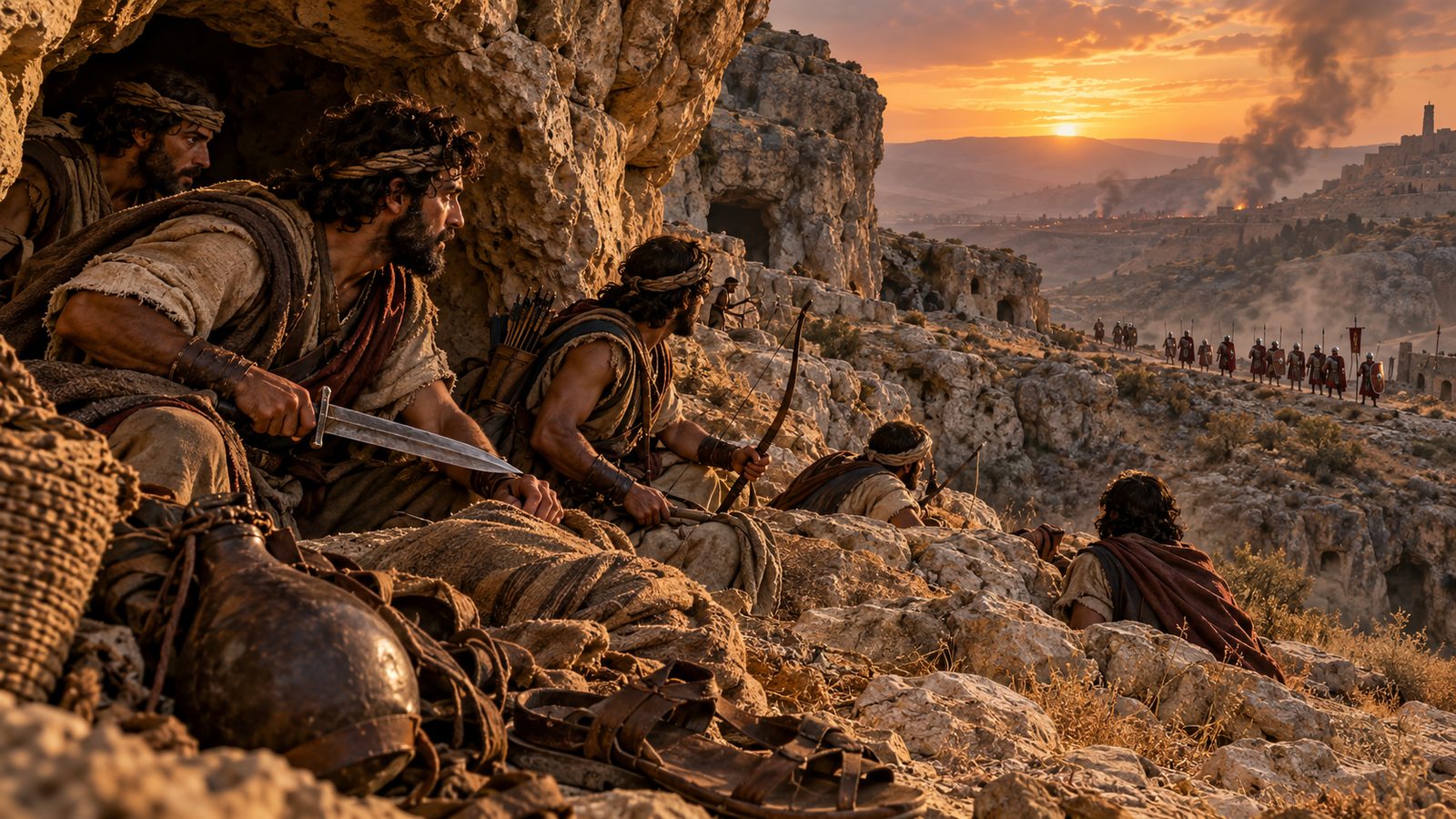
- AD 132–135 The Bar Kokhba revolt; letters and coins from the revolt have been found in the Judean desert.
- After AD 135 Jews are barred from the city, and it keeps the name Aelia Capitolina.
Temple implication: Rome's new city covers the old, but the question of Jerusalem and the Temple remains in the story.
A new name over an ancient city
The Temple has already fallen when Hadrian’s reign brings another transformation to Jerusalem. Rome establishes the colony Aelia Capitolina, stamping the city with an imperial name and pagan civic identity. For Jewish people whose memory and hope remain bound to Jerusalem, the change is more than an administrative decision.
The name of an emperor can be written over a city without erasing its history. That tension carries this chapter: the empire can regulate entry, rebuild streets, and erect religious monuments, but it cannot make itself the author of God’s promises.
14For we don’t have here an enduring city, but we seek that which is to come.
15Through him, then, let’s offer up a sacrifice of praise to God continually, that is, the fruit of lips which proclaim allegiance to his name.
What the historical sources tell us
Hadrian’s plans for the Roman colony are associated with his visit around AD 130. Cassius Dio reports that Hadrian's founding of Aelia Capitolina, with a temple of Jupiter on the Temple's site, preceded the revolt.
Cassius Dio reports a city named Aelia Capitolina and a temple of Jupiter on the site of the former Jewish sanctuary, connecting these measures with the outbreak of war (Roman History 69.12). His account is an important ancient witness. The exact location and physical reconstruction of the pagan installations remain historical and archaeological questions; a dramatic illustration is not independent proof of their appearance.
The revolt led by Simon bar Kokhba is crushed by Rome, bringing devastating losses and further displacement. Eusebius later reports the exclusion of Jews from Jerusalem and the establishment of a predominantly Gentile Christian leadership there (Church History 4.6). This is a particular ancient account, not proof that all Jewish presence in the whole land ended.
The struggle over worship and public identity
Roman civic religion joined imperial authority to the honor of pagan gods. Imposing that identity on Jerusalem challenged Jewish attachment to the city and its sanctuary traditions. The issue was not simply whose architecture was most impressive: a ruling power claimed the right to determine the city’s religious and public order.
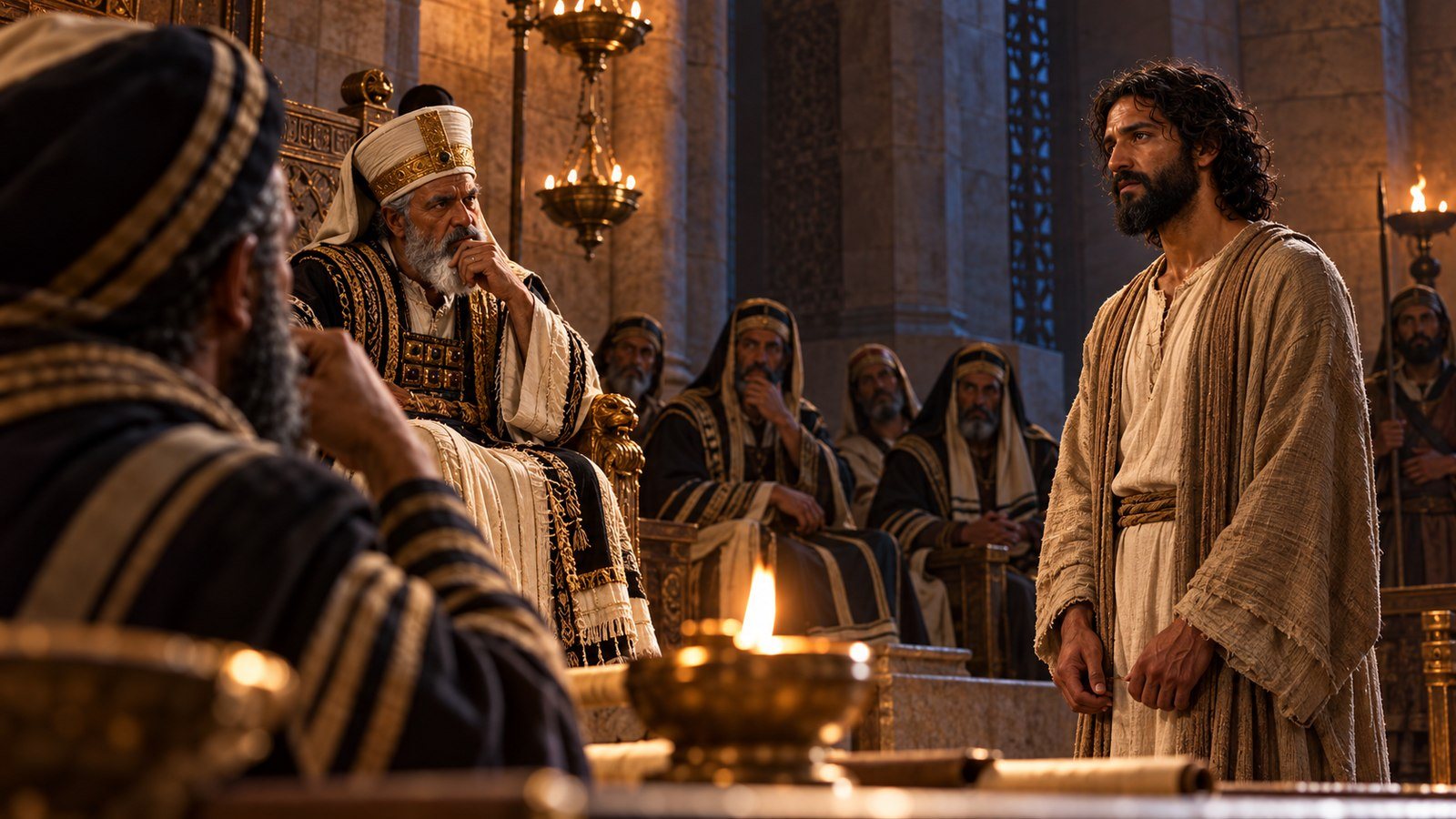
For Christian readers, that challenge recalls the biblical conflict between God’s authority and rulers who demand allegiance beyond their place. Psalm 2 depicts the nations’ opposition to the Lord and His anointed; Acts 4:24–30 applies that psalm to opposition against Jesus. These passages establish a theological lens for resisting idolatrous claims. They do not name Hadrian or provide an inspired account of every motive behind his policies.
The Son’s kingdom is not an imperial construction
Daniel 7:13–14 presents an everlasting dominion received by one like a son of man. Jesus identifies Himself with that figure, and the apostles proclaim His resurrection and exaltation (Mark 14:61–62; Acts 2:29–36). The promised Messiah’s authority is therefore anchored in Scripture and God’s act of raising Him, not in possession of the Roman capital or control of Jerusalem’s streets.
Hadrian does not create a new stage of Jesus’ saving fulfillment. Rather, his era tests the Church’s confidence in the fulfillment already accomplished. Jesus is the living Temple, His offering is sufficient, and His continuing heavenly ministry is secure (John 2:19–22; Hebrews 9:24–28). An emperor can change a city’s civic name; he cannot reverse the resurrection.
A second sacred-site story—and its limits
Eusebius’s Life of Constantine describes a pagan shrine associated with Aphrodite over the place later identified as Jesus’ tomb and its removal during Constantine’s building project. That account concerns the site of the Holy Sepulchre, not the Temple Mount. The two locations must not be merged into one scene.
The source is later than Hadrian and celebrates Constantine’s work. Claims that Hadrian deliberately intended to conceal the precise tomb of Jesus, or that every archaeological question is thereby settled, require more than repeating the account. We can describe the tradition while distinguishing it from direct evidence of an emperor’s private intention.
Banned from the City, Not Cut Off from the Promise
By AD 130 Hadrian plans to rebuild Jerusalem as a Roman colony, Aelia Capitolina. Under Simon bar Kokhba the Jews rise in AD 132, and Rome crushes the revolt in AD 135 and bars Jews from the city. The dispersion that began in AD 70 deepens, and many would wonder whether God's purposes for His people were finished.
Paul had addressed that fear ahead of time. A hardening has come on part of Israel, he writes, "until the fullness of the Gentiles has come in," and so all Israel will be saved (Romans 11:25–26). Rome can rename a city and ban a people from it. It cannot revoke a covenant. Through long centuries of exile Israel's story is still God's story.
Faithfulness when the public story is hostile
The New Testament prepares believers for life where rulers and neighbors do not honor Christ. First Peter calls Christians to honorable conduct, endurance, and hope, while insisting that Jesus remains the chosen cornerstone (1 Peter 2:4–12). The Church need not possess cultural dominance to be God’s dwelling.
This does not justify inventing scenes of every second-century congregation worshiping in hiding. Their circumstances varied. The practical lesson rests on apostolic instruction: resist idolatry, honor people, do good, and remain loyal to Jesus. Faithfulness is not measured simply by whether the surrounding culture endorses us.
A dwelling beyond imperial control
The Temple pattern joins God’s presence with His government. Under the new covenant, that authority is expressed in allegiance to Jesus and life in the Spirit. Access to the Father is not issued by an emperor, and it is not canceled when the city’s official symbols change. We bring grief and historical injustice before God without making hatred our mode of worship. His people are called to truth, holiness, prayer, and patient witness. God’s enduring rule frees us from the need to pretend every visible setback is the end of His purpose.
Temple Prayer Response
Father, keep us faithful when public power seems to contradict Your promises. Jesus, risen Messiah, our access rests in Your victory. Holy Spirit, guard us from idolatry, fear, and contempt for others. Teach us to remember Israel’s suffering honestly, pray for Jerusalem, and serve our neighbors while holding firmly to Your truth. Amen.
Psalm 2; Daniel 7:9–14; Mark 14:61–62; John 2:19–22; Acts 2:29–36; 4:24–30; 1 Peter 2:4–17; Hebrews 9:24–28; Romans 11:17–29.
- What can imperial power change, and what can it never undo about Jesus’ saving work? How can Christians describe Israel’s displacement without boasting or erasing history? What would honorable, courageous witness look like where you live?
Ancient reports are attributed to their authors. The Holy Sepulchre and Temple Mount are distinct sites. This chapter does not attribute invented thoughts, dialogue, or later events to Hadrian. The labeled Scripture block quotes the World English Bible (WEB), public domain; other Scripture discussion is summarized. L: Cassius Dio, Roman History 69.12–14 — Aelia Capitolina and the revolt | https://penelope.uchicago.edu/Thayer/E/Roman/Texts/Cassius_Dio/69%2A.html L: Eusebius, Church History 4.6 — The revolt and Jerusalem afterward | https://www.newadvent.org/fathers/250104.htm L: Eusebius, Life of Constantine 3.26 — The tomb-site account | https://www.ccel.org/ccel/schaff/npnf201.iv.vi.iii.xxvi.html L: John 2 — The living Temple | https://ebible.org/eng-web/JHN02.htm L: 1 Peter 2 — The cornerstone and faithful conduct | https://ebible.org/eng-web/1PE02.htm L: Romans 11 — The warning against boasting | https://ebible.org/eng-web/ROM11.htm
Common Questions About Hadrian and Aelia Capitolina
Who was Hadrian, and what did he do to Jerusalem?
Emperor Hadrian visited Judea in AD 130 and planned to rebuild Jerusalem as a Roman colony named Aelia Capitolina (Cassius Dio, Roman History 69.12).
What was the Bar Kokhba revolt?
A Jewish revolt led by Simon bar Kokhba from AD 132 to 135. Rome crushed it and barred Jews from the city.
Does Paul say God has abandoned Israel?
No. Romans 11:1–2 says God has not rejected His people, and Romans 11:29 says His gifts and calling are irrevocable.