Primary passages: Ezekiel 40–48; Isaiah 2–4; Zechariah 13–14.
The prophets promise that the glory returns, the nations come to learn, and the Lord reigns from Jerusalem. This chapter follows the premillennial view of Ezekiel's temple (Ezekiel 40–48; Isaiah 2:2–4; Zechariah 14).
In this chapter
- The glory returns
- Where this chapter stands in the story
- A measured sanctuary for a holy people
- The nations come to learn
- Daniel’s throne vision: The King receives the kingdom
- Isaiah 2–4: Judgment, cleansing, and glory
- Zechariah 13–14: A cleansed people and the reigning Lord
- A river flows from the sanctuary
- Ezekiel 37: From restored Israel to God’s sanctuary
- The difficult question: What about sacrifices?
- Another question: Who is the prince?
- Temple Prayer Response
Future, with Ezekiel's vision in 573 BC
- c. 740 BC Isaiah sees the mountain of the Lord's house established (Isaiah 2:2–4).
- 573 BC Ezekiel receives the temple vision (Ezekiel 40–48).
- c. 518 BC Zechariah describes the Lord's reign from Jerusalem (Zechariah 14).
- c. AD 95 John describes the thousand-year reign (Revelation 20).
Temple implication: The prophets promise that the glory returns and the nations come to learn, and Christians interpret these visions in the light of Jesus.
The glory returns
Ezekiel had seen the glory depart. Jerusalem’s sanctuary, corrupted by idolatry, could no longer be treated as a guarantee of protection. Judgment came, the city fell, and the people were scattered. But departure was not the last vision God gave His prophet.
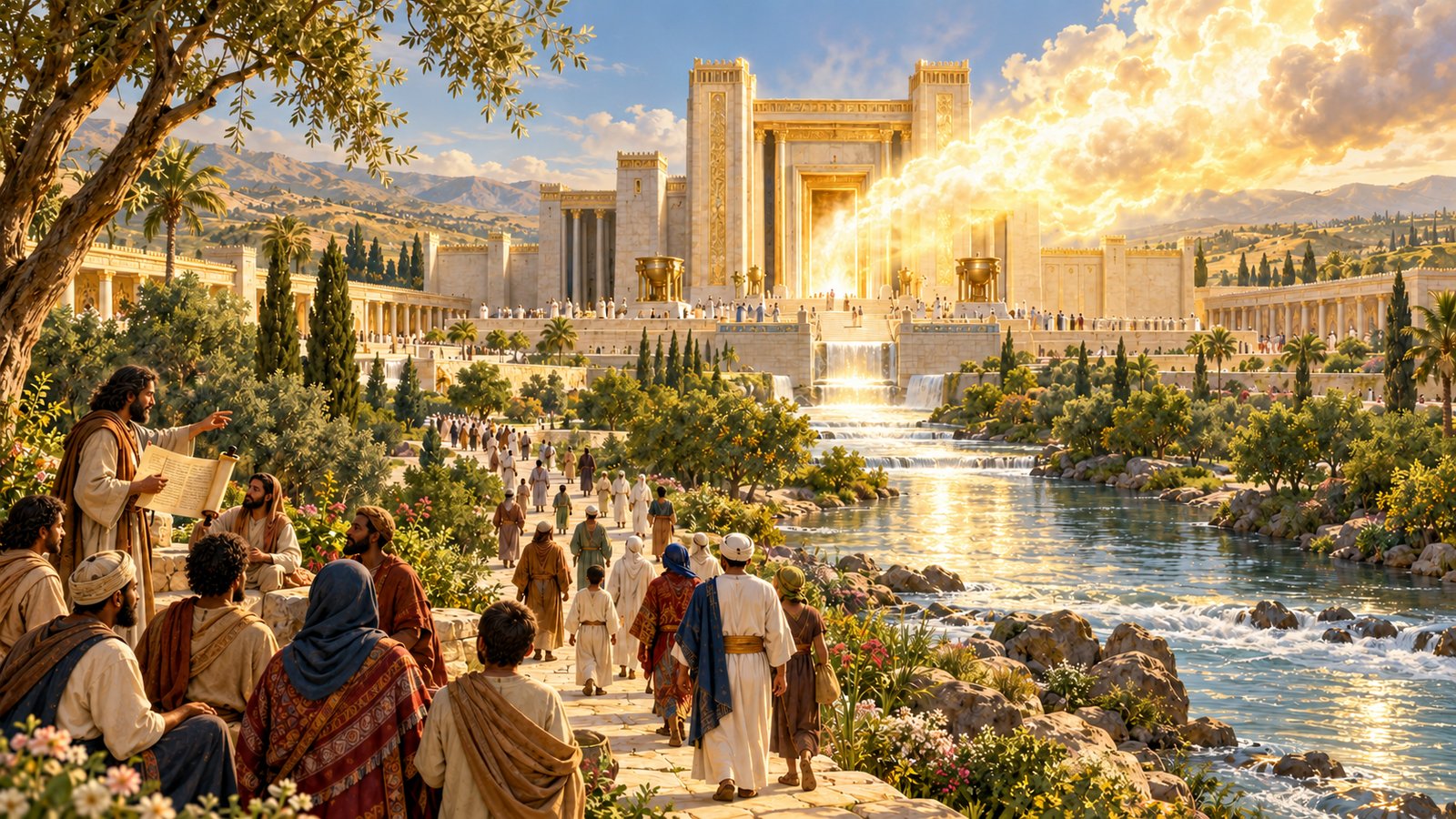
In Ezekiel 43, the glory of the God of Israel approaches from the east. His voice is like many waters, the earth shines with His glory, and the glory fills the temple. Ezekiel falls on his face. The climax is not the discovery of a flawless building. God is declaring His intention to dwell among His people.
“Son of man, this is the place of my throne and the place of the soles of my feet, where I will dwell among the children of Israel forever.” — Ezekiel 43:7a, World English Bible
Here the two great themes of this study meet: God’s presence and God’s government. The sanctuary is the place of His dwelling and the place of His throne. His people are invited near, and their life together must come under His holy authority.
4Yahweh’s glory came into the house by the way of the gate which faces toward the east.
5The Spirit took me up and brought me into the inner court; and behold, Yahweh’s glory filled the house.
Where this chapter stands in the story
Chapter 25 introduced Ezekiel’s restored-temple vision in its setting of exile. We return to it now to examine its relationship to the future reign of the Messiah. The approach followed in this series is premillennial: Jesus returns and reigns before the final judgment and the new creation described in Revelation 21–22. Revelation 20 speaks of the saints reigning with Christ for a thousand years.
The identification of Ezekiel 40–48 with a physical temple during that thousand-year reign comes from reading Ezekiel alongside other prophetic passages. Revelation 20 describes the thousand-year reign, Ezekiel 40–48 describes the temple, and many Christians join the two. Christians who affirm the authority of Scripture interpret how these visions fit together in different ways. Derek (this website's editor) respects varied interpretations of these passages but holds to a futurist, premillennial view. We will present the future-temple reading clearly while keeping that distinction visible.
Within this reading, the proposed Tribulation Temple and the Millennial Temple have different roles. The former is associated with contested worship and desecration; the latter expresses restored holiness under the Messiah’s rule. Scripture does not give us a construction history explaining every transition between them.
A measured sanctuary for a holy people
Ezekiel’s vision is extensive: gates, courts, rooms, an altar, priestly responsibilities, offerings, land allotments, and the ordering of community life. Those details prevent us from reducing the vision to a pleasant feeling about restoration. God’s presence calls for a people whose worship and conduct are rightly ordered.
In Ezekiel 43:10–12, the pattern is shown to Israel in a context of shame over sin. The vision confronts the very practices that led to judgment. Restoration is more than recovering national strength or rebuilding something impressive. The people must learn to distinguish the holy from the common and submit to the Lord who dwells among them.
That lesson reaches us now. We can admire temple architecture while resisting God’s authority over our speech, money, relationships, and worship. The holy God who calls His people near also teaches them how to live before Him.
The nations come to learn
Isaiah 2:2–4 promises the nations' instruction, the Lord's judgment, and peace replacing warfare. Within the premillennial reading followed here, this describes the future public exercise of the Messiah's government from Jerusalem. Jesus' identity as that King is grounded in the Davidic promises and the New Testament's witness to His resurrection and enthronement (Luke 1:32–33; Acts 2:30–36), not a resemblance between modern politics and the prophetic imagery. His reign fulfills the righteous rule the nations need.
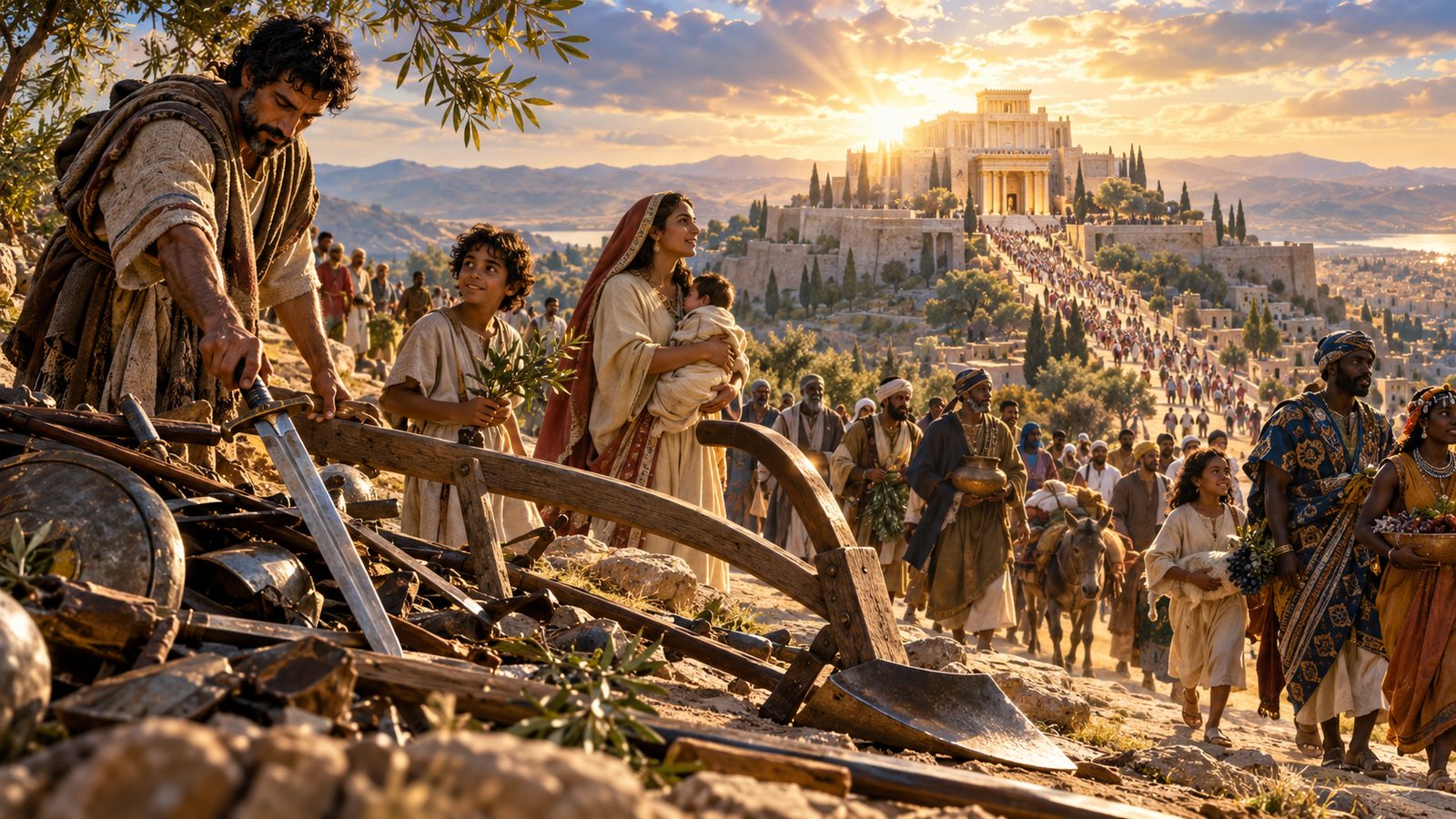
Notice the connection: worship leads to instruction; instruction leads to obedience; righteous judgment establishes peace. The nations are not simply attending a religious celebration. Their affairs come under the authority of the King.
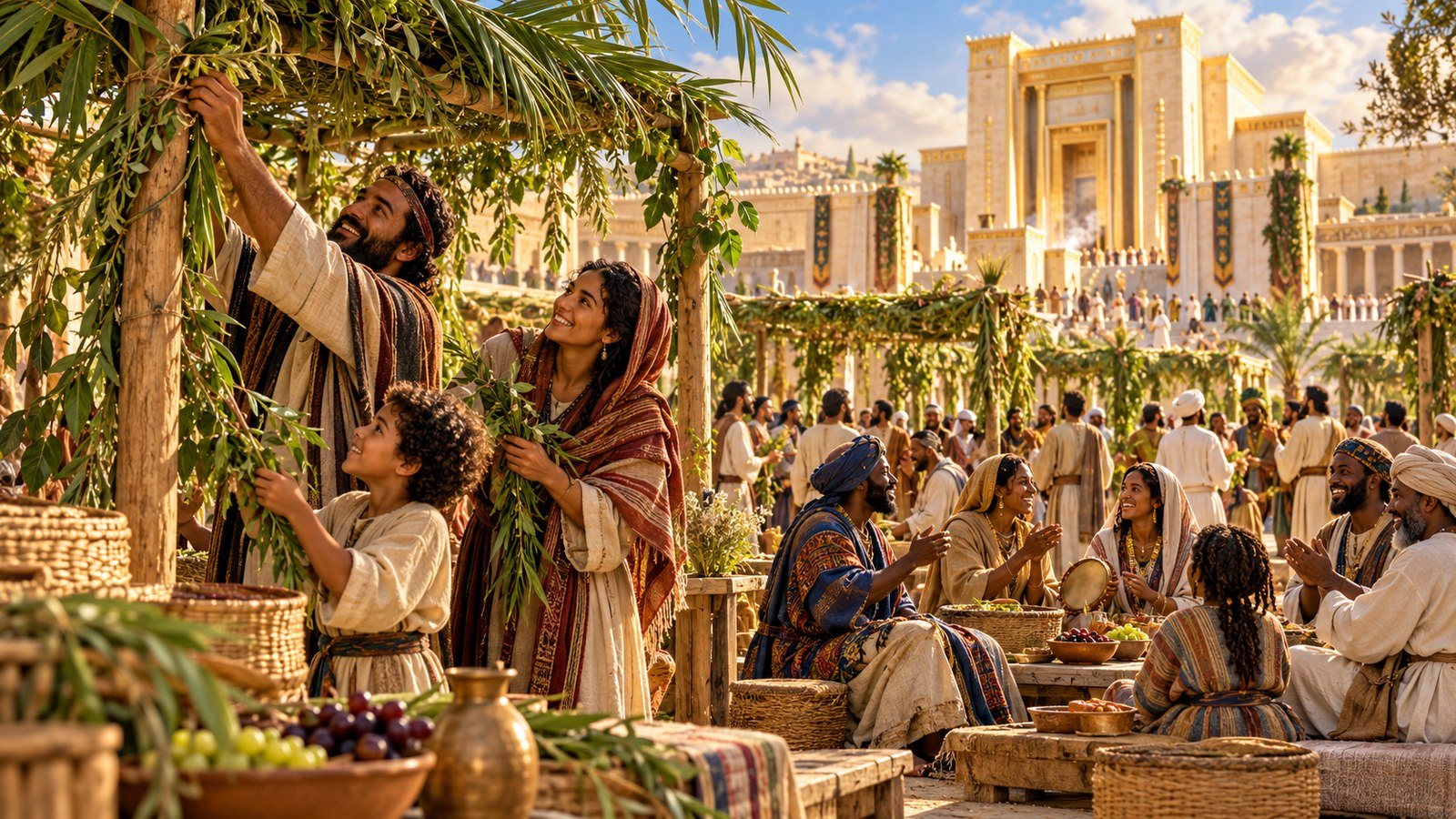
Zechariah 14 adds the nations’ annual worship of the King at the Feast of Booths and judgment upon refusal. It also extends holiness into ordinary life, even to everyday utensils. The distinction between sacred worship and public conduct can no longer serve as an excuse for divided allegiance. The Lord claims both.
Daniel’s throne vision: The King receives the kingdom
Daniel 7 moves from violent kingdoms and the persecution of the saints to the judgment of the Ancient of Days. One like a son of man receives dominion over all peoples, nations, and languages; the saints share in the kingdom. In a Jesus-centered reading, the hope of Messiah’s government is anchored here, not in an extrapolation from modern military power. Daniel 12 adds deliverance and resurrection, reminding us that God’s purpose includes victory over death.
We read these promises alongside Revelation 20’s reign of Christ and Ezekiel’s restored sanctuary. That connection supports the premillennial approach taken here. The King and His authority are the center of the connection.
Isaiah 2–4: Judgment, cleansing, and glory
Isaiah’s vision of the nations streaming to Zion must be read with the chapters that follow. Isaiah 2 confronts human pride and idolatry. Isaiah 3 exposes Jerusalem’s rebellion, failed leadership, and the exploitation of the poor. The prophet does not move directly from national ambition to national glory. God first confronts the sin of His own people.
Isaiah 4:2–6 then depicts the Branch of the Lord, a surviving people called holy, and the washing away of Zion’s filth through judgment and burning. Christians have traditionally read the Branch in relation to the Messiah, while also recognizing the passage’s language of the land’s fruitfulness. Glory and protection are joined: cloud by day, fiery brightness by night, and shelter over Zion’s assemblies recall the wilderness presence.
The movement matters for our temple theology. God’s future dwelling is not His endorsement of unrepentant pride. He cleanses a people for His presence. His government includes the treatment of the poor, the integrity of leaders, and the character of communal life. Worship and righteousness belong together.
Zechariah 13–14: A cleansed people and the reigning Lord
Zechariah 13 begins with a fountain opened for the house of David and Jerusalem for sin and uncleanness. Idolatry and false prophecy are removed. The chapter also speaks of the struck shepherd—a passage Jesus applies to the scattering of His disciples (Matthew 26:31)—and of a remnant refined through fire, calling upon God and acknowledged as His people.
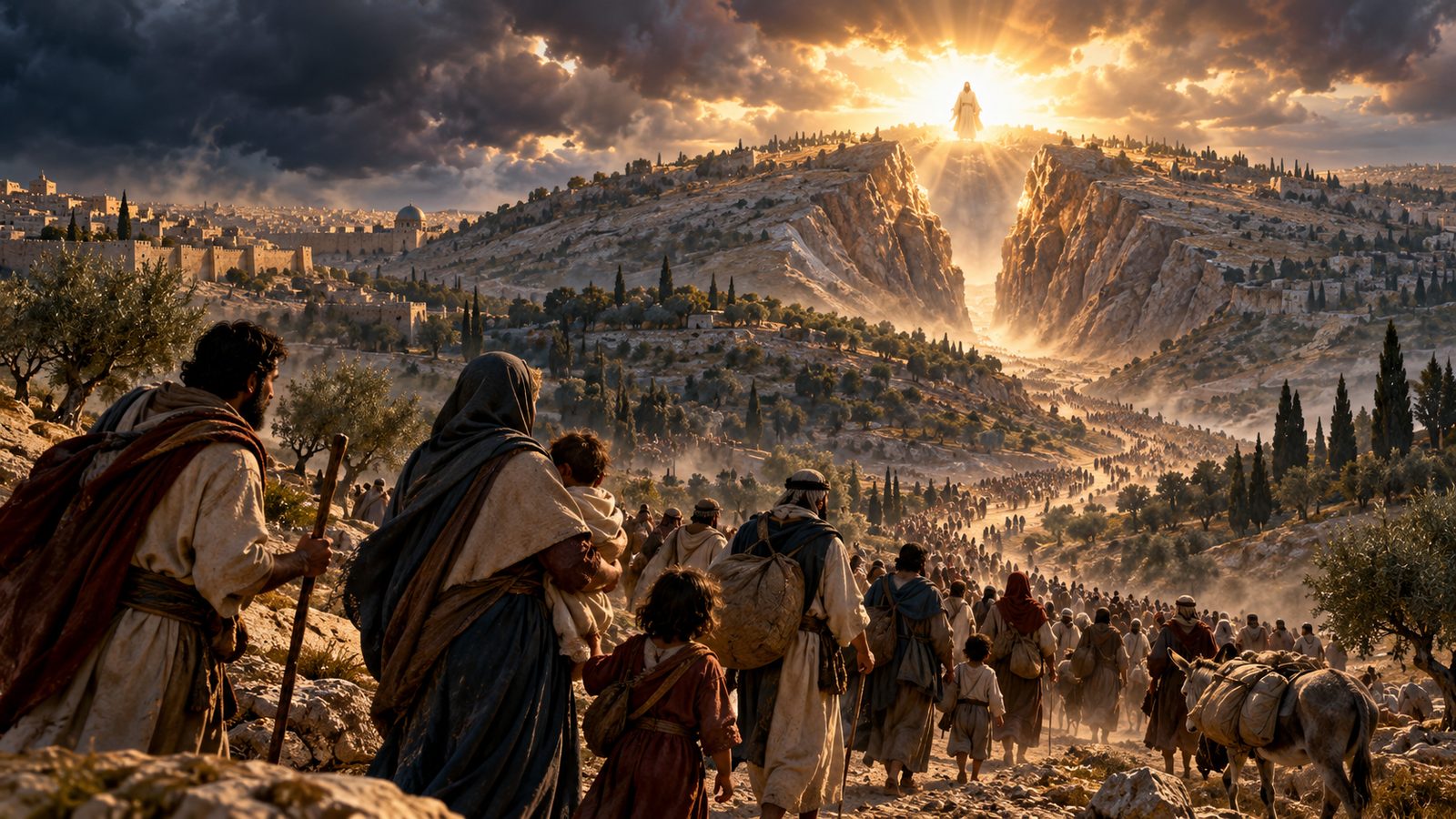
Zechariah 14 portrays Jerusalem under attack, the Lord’s intervention, His standing on the Mount of Olives, living waters flowing from Jerusalem, and His kingship over the earth. Its concluding scenes unite the nations’ worship with holiness extending into daily life. Within this series’ framework, these passages inform our expectation of Messiah’s future public reign.
We should not use Zechariah 13’s fractions as a calculation of deaths in a current war or assume that every episode across these chapters occupies one uninterrupted moment. The shepherd passage already has an explicit New Testament application. Read each movement in its setting before relating it to the final restoration. The prophetic anchor is cleansing, covenant faithfulness, and the Lord’s victory—not a timetable derived from headlines.
A river flows from the sanctuary
In Ezekiel 47, water flows from the temple and becomes a river too deep for the prophet to cross on foot. It brings life to the waters it reaches. Trees grow along its banks, bearing food and leaves for healing. Restoration flows outward from the place of God’s presence.
This is more than an image of political success. The Lord’s reign brings life where there was death and barrenness. The temple story expands from a people approaching God to blessing flowing outward into the land. When we reach Revelation 22, the river and tree imagery will appear again, now flowing from the throne of God and the Lamb.
One Nation, One King, and the Nations Beside Her
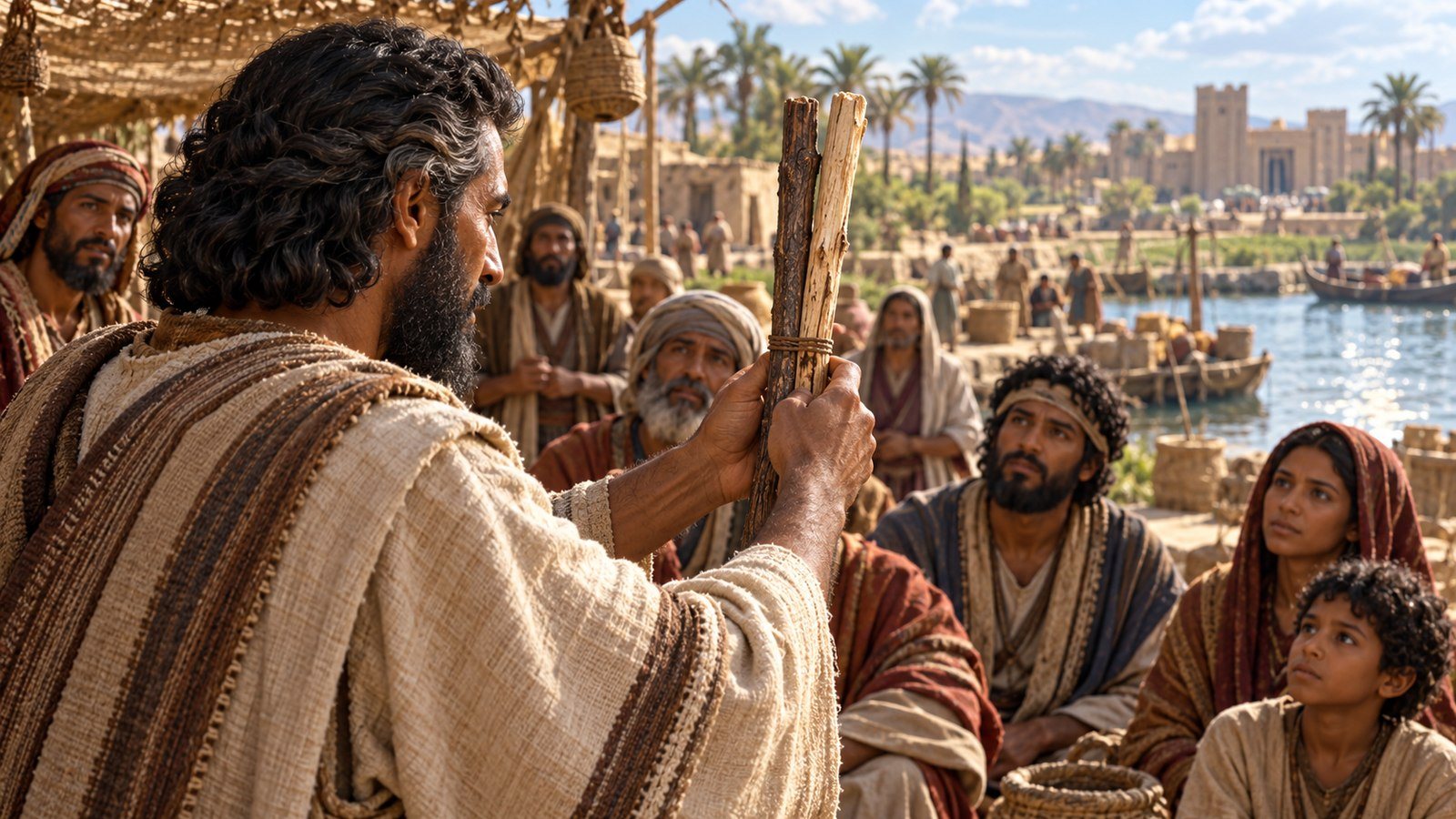
Ezekiel does not stop with the Temple. He is told to take two sticks, write "Judah" on one and "Joseph" on the other, and join them in his hand. God explains that He will take Israel from among the nations and make them one nation in the land, under one king, "David my servant," and set His sanctuary in their midst forevermore (Ezekiel 37:15–28).
Zechariah sees the same horizon: the people will look on the One they pierced (Zechariah 12:10), and "Yahweh will be King over all the earth" (Zechariah 14:9). Isaiah adds that the nations will stream to the mountain of the Lord's house to learn His ways (Isaiah 2:2–4). Read together, the prophets describe a day when Israel stands restored and the nations come to worship alongside her. The one people of God is not made smaller by that picture. It is made larger.
Ezekiel 37: From restored Israel to God’s sanctuary
Before Ezekiel measures the restored temple, he sees dry bones receive life and hears God’s promise to gather Israel. The vision must be read as a whole: national restoration, cleansing, spiritual renewal, reunited Israel, a Davidic shepherd-king, and a covenant of peace lead toward God’s enduring dwelling among His people (Ezekiel 37:1–28).
In chapter 37, we considered Israel’s rebirth in 1948 as a development many Christians connect with the promise of national restoration. Here the prophecy carries us beyond sovereignty alone. Its fulfillment includes obedience to God, life through His Spirit, and the kingship Christians understand to find its saving center in Jesus, the Son of David. No modern government should be equated automatically with that completed restoration.
Ezekiel 37:26–28’s promise of God’s sanctuary and dwelling among Israel provides a direct bridge into the temple vision of chapters 40–48. In the premillennial interpretation followed here, these promises inform the expectation of Messiah’s future reign. The text anchors our hope in God’s covenant faithfulness, presence, and government rather than in a date supplied by modern events.
The difficult question: What about sacrifices?
Ezekiel describes animal offerings, including offerings associated with atonement and purification. We should not quietly omit them because they are difficult to explain. Hebrews 10 is equally clear that animal blood cannot take away sins and that Jesus’ offering is once for all.
Many who expect a literal future temple understand its offerings as memorial or ceremonial, pointing back to Christ rather than competing with His sacrifice. Some emphasize ritual purification rather than the removal of moral guilt. These are proposed explanations; Ezekiel does not explicitly label the entire system a memorial of Calvary.
Other Christians understand the sacrificial imagery as prophetic language fulfilled in Jesus and His people rather than as a future restoration of animal offerings. The tension deserves honest study. Whatever view we hold, a future sacrifice cannot supplement an insufficient cross. The cross is sufficient.
Another question: Who is the prince?
Ezekiel’s prince is sometimes identified immediately with Jesus. That identification creates difficulties: the prince worships, has sons and inheritance arrangements, and, in Ezekiel 45:22, provides a sin offering for himself and the people. These features should make us cautious about equating him directly with the sinless Messiah.
Some interpreters distinguish this prince as a human ruler serving under the Messiah; others read him typologically. We can affirm Jesus’ kingship without assigning every detail about Ezekiel’s prince to Him.
The throne governs the worship
The Temple is the appointed place of meeting, but God’s presence is never detached from His rule. He orders worship, judges injustice, establishes holiness, and teaches His people to live in His ways. The vision’s final city-name declares its central promise: “Yahweh is there” (Ezekiel 48:35, WEB). For the Church today, this future hope does not suspend our present calling. We are already God’s temple by the Spirit, and Jesus is already our High Priest. If we expect His righteous government to become publicly manifest, we should willingly receive His government now. Repentance, integrity, intercession, and obedience are preparation for His kingdom.
Temple Prayer Response
Jesus, righteous King, let Your coming reign shape our lives today. Cleanse the places where we want Your presence without Your authority. Teach us to worship according to Your truth, seek justice, and pray for Israel and the nations. Keep Your finished sacrifice central as we study what remains mysterious. Let the life that flows from Your presence bear fruit through us. Amen.
Ezekiel 37:1–28; Ezekiel 40–48, especially 43:1–12; 44:15–24; 45:21–25; 46:16–18; 47:1–12; 48:35; Isaiah 2:2–4; Zechariah 14:9, 16–21; Revelation 20:1–10; Hebrews 10:1–18; Romans 11:17–29. Daniel 7:9–14, 21–27; 12:1–3; Isaiah 3:8–15; 4:2–6; Zechariah 13:1–9; Matthew 26:31.
- What does Ezekiel explicitly describe, and what conclusions depend on connecting his vision with Revelation 20? Where do God’s presence and government meet in the vision? How does Hebrews 10 govern our interpretation of future offerings? What area of your life needs to come more fully under the King’s authority?
This chapter follows a premillennial framework and identifies the placement of Ezekiel’s vision within the millennium as an interpretation. Scripture is summarized except for the explicitly labeled WEB quotations. Hebrews 10 establishes the sufficiency of Jesus' sacrifice. L: Ezekiel 43 — The return of glory | https://ebible.org/eng-web/EZK43.htm L: Ezekiel 44 — Holiness and priestly service | https://ebible.org/eng-web/EZK44.htm L: Ezekiel 45 — The prince and offerings | https://ebible.org/eng-web/EZK45.htm L: Ezekiel 46 — The prince, worship, and inheritance | https://ebible.org/eng-web/EZK46.htm L: Ezekiel 47 — The river from the sanctuary | https://ebible.org/eng-web/EZK47.htm L: Ezekiel 48 — The city’s name | https://ebible.org/eng-web/EZK48.htm L: Isaiah 2 — The nations learn God’s ways | https://ebible.org/eng-web/ISA02.htm L: Zechariah 14 — Worship of the King | https://ebible.org/eng-web/ZEC14.htm L: Revelation 20 — The thousand-year reign | https://ebible.org/eng-web/REV20.htm L: Hebrews 10 — Christ’s sufficient sacrifice | https://ebible.org/eng-web/HEB10.htm L: Daniel 7 — The King and His saints | https://ebible.org/eng-web/DAN07.htm L: Daniel 12 — Deliverance and resurrection | https://ebible.org/eng-web/DAN12.htm L: Isaiah 3 — Judgment on corrupt leadership | https://ebible.org/eng-web/ISA03.htm L: Isaiah 4 — A cleansed remnant and glory | https://ebible.org/eng-web/ISA04.htm L: Zechariah 13 — Cleansing, the shepherd, and refinement | https://ebible.org/eng-web/ZEC13.htm L: Ezekiel 37 — Dry bones, reunited Israel, and God’s sanctuary | https://ebible.org/eng-web/EZK37.htm
Common Questions About The Millennial Temple
Does the Bible describe a millennial temple?
Ezekiel 40–48 describes a restored temple, and Revelation 20 describes a thousand-year reign. This chapter follows the view that connects the two.
What will the nations do in the kingdom?
Isaiah 2:2–4 says nations will come to the mountain of the Lord's house to learn His ways, and Zechariah 14:16 says they will go up to worship the King.
How do the sacrifices in Ezekiel 40–48 fit with Christ's sacrifice?
Hebrews 10:10–14 says Christ's offering is sufficient. Interpreters differ, and many see the sacrifices as memorial.